How to Start a Perfume Brand on a Small Budget
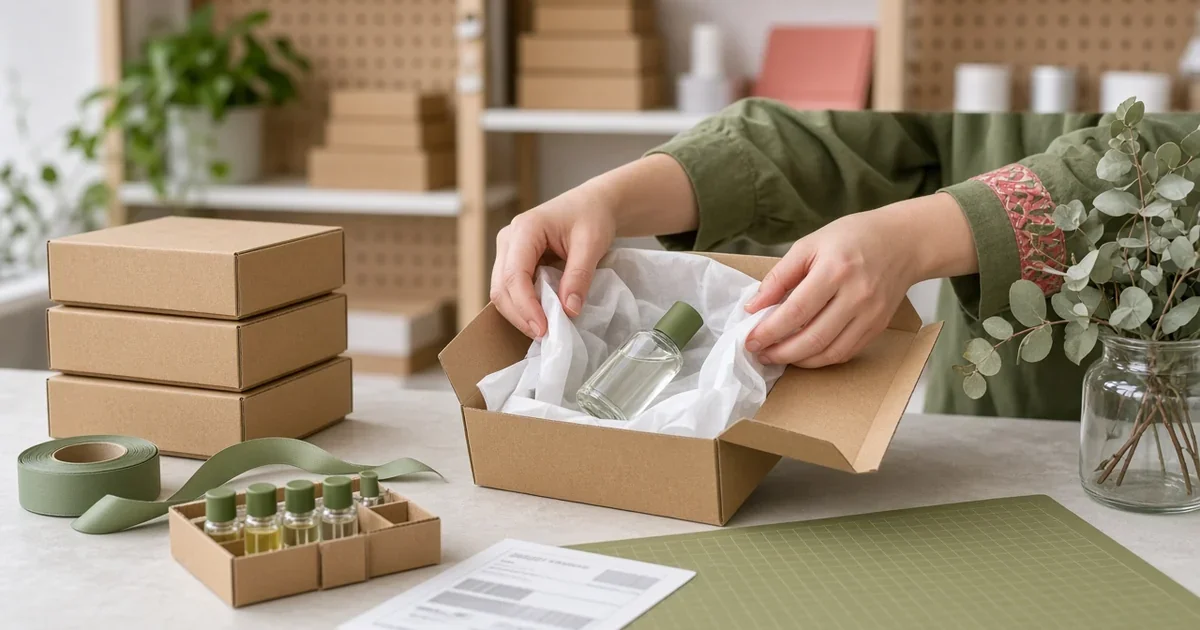
Plenty of people dream of their own fragrance line, then stop when they picture custom bottles, a glossy launch and a warehouse full of stock. The good news is that none of that is how most indie perfume brands begin. Many start at a kitchen bench with a scale, a handful of materials and a single scent they can't stop wearing.
If you want to start a perfume business on a small budget, the goal of your first year isn't to look like a luxury house. It's to prove that strangers will pay for your fragrance, that you can make it consistently, and that every bottle leaves you with a margin. This guide walks you through a lean, practical way to get there.
Is It Realistic to Start a Perfume Business With Little Money?
Yes, as long as you set the right expectations. A small budget can cover a first micro-batch: one or two formulas, a modest number of finished units, simple but clean packaging and a basic way to take orders. It usually can't cover custom-moulded bottles, a professional photo shoot, paid advertising at scale or large minimum order quantities from a contract manufacturer.
Think of your first run as an experiment that buys information: which scent sells, what customers say and how long each order takes you. Then reinvest the revenue into a bigger, better second batch. That loop is how many small fragrance brands grow without outside investment.
Step 1: Pick One Concept and One Hero Scent
The fastest way to burn a small budget is to launch five average perfumes at once. Every extra scent multiplies your raw materials, bottles, labels, samples and photos, while splitting your customers' attention.
Instead, choose one clear concept and build a single hero fragrance around it, with at most one companion scent later. A tight concept makes everything else easier:
Your formula has a clear direction, so you make fewer wasted trials.
Your branding (name, label, copy) tells one story instead of five.
Your marketing focuses on one product people can remember and recommend.
Your inventory stays small, so less cash sits on the shelf.
Ask yourself who the scent is for and what makes it different from what they can already buy. If you can't answer in a sentence, keep refining.
Step 2: Develop Your Formula (or Choose a Starting Point)
Small brands usually take one of three routes to their first fragrance:
Formulate from raw materials. You blend naturals and aroma chemicals yourself. It takes the most learning, but gives you full control and a scent that's genuinely yours.
Build on ready-made fragrance oils or accords. Faster and more forgiving for beginners, though your scent may be less distinctive and you depend on your supplier's documentation.
Work with a perfumer or a private label supplier. Less hands-on, but expect higher costs and minimum order quantities that can stretch a small budget.
If you formulate yourself, work in small trials, weigh everything rather than counting drops, and record every version. Let each trial rest before you judge it, and get feedback from people outside your household, ideally smelling samples blind. If you're just getting started, our beginner's guide to making perfume at home covers equipment, percentages, dilution and maceration step by step.
Keep Your Formula Records From Day One
The day you sell your first bottle, your formula stops being a hobby notebook and becomes a product specification. You'll need to remake it exactly, know what's in it for your labels and safety checks, and trace which batch went to which customer.
Step 3: Choose a Format That Fits Your Budget
Your product format affects cost, regulation and shipping. A few common options for a first launch:
Perfume oil roll-ons. Small bottles, an oil carrier and no alcohol, which can make shipping simpler. Popular with indie brands for a first run.
Alcohol-based sprays (EdT, EdP or extrait). What most customers picture when they think "perfume", but alcohol is flammable, so check the carrier rules for shipping fragrances in your country before committing.
Discovery or sample sets. Small vials that let customers try your scent before committing to a full bottle, and a low-risk way to test demand.
Whichever you choose, use stock bottles and closures from an established supplier rather than custom packaging. Clean stock packaging with a well-designed label looks professional and keeps your minimum orders small.
Step 4: Know Your Real Cost Per Bottle
Many new perfume businesses price by gut feeling and only discover later that they lose money on every sale. Before you set a price, calculate what one finished unit really costs:
Fragrance concentrate: the cost of each material, by weight, at the amount used in the formula, including diluted materials at their real strength.
Carrier: perfumer's alcohol, oil or base.
Packaging: bottle, cap or roller, label, box, insert and any samples you include.
Fulfilment: mailers, protective packaging and the portion of postage you absorb.
Fees: payment processing, marketplace or platform fees.
Losses: some product is always lost in testing, filling and breakage.
Once you know your cost per bottle, you can work backwards to a retail price that leaves a healthy margin, and decide whether a wholesale price is even possible. We go through the method in detail, with worked examples, in how to calculate perfume formula cost and price it.
Step 5: Get the Compliance Basics Right
Fragrance is a cosmetic product in most markets, so rules apply even to very small brands. The details depend on where you make and sell, and this isn't legal advice, but a few areas come up almost everywhere:
Safety of your formula. The IFRA Standards set limits and prohibitions for fragrance materials by product category. Check your formula against them and ask suppliers for their safety data sheets and IFRA documentation. Our guide to IFRA standards for indie perfumers explains how this works.
Labelling. Most markets require an ingredient list and other information on the label, and some require certain fragrance allergens to be declared above set thresholds.
Local cosmetic regulations. For example, in the EU cosmetics need a Responsible Person and a safety assessment before going on sale; in the US, the Modernization of Cosmetics Regulation Act (MoCRA) introduced new obligations for cosmetic businesses; in Australia, importers and manufacturers of cosmetic ingredients may need to register with AICIS.
Business basics. Register your business, check whether your local council allows home-based production, and consider product liability insurance.
It's far cheaper to get this right before launch than to relabel or recall a batch afterwards.
Batch Codes Are Not Optional
Give every production run a batch or lot number and print it on each unit. If a customer has a reaction or a bottle leaks, you need to know exactly which batch it came from, which materials went into it and when it was made. A simple, consistent log is enough at the start, as long as you keep it up to date.
Step 6: Produce in Small Batches
On a small budget, cash tied up in unsold stock is your biggest risk. Make small batches, sell them, learn and then make more. A few habits help:
Scale your formula by weight from your final trial, rather than by eye, so each batch smells the same.
Log every batch with its date, size, lot number and notes about anything unusual.
Track your raw material stock so you reorder before you run out of a key ingredient mid-launch.
Keep a retained sample from each batch so you can compare later.
ScentLabs was built for exactly this stage. You can scale a formula to any batch size and log every production run, and track raw material stock with low-stock alerts, without juggling spreadsheets.
Step 7: Make Your First Sales Without a Big Marketing Budget
You don't need paid ads to sell your first batch. Start where people already know you, then widen the circle:
Pre-orders and sample sets. Offering samples or taking pre-orders lets early customers fund your first full batch and tells you how much to make.
Social media. Share the process: sourcing materials, failed trials, filling bottles, packing orders. Indie fragrance audiences love behind-the-scenes content.
Local markets and pop-ups. Smelling a perfume in person still sells it best, and face-to-face feedback is invaluable.
A simple online shop. An existing e-commerce platform or marketplace is usually cheaper and faster than a custom website for your first run.
Word of mouth. Ask your first customers for reviews and photos, and make reordering easy.
Reinvest early revenue into whatever gave you the biggest return: better packaging, a second scent, a larger batch or a few targeted collaborations.
FAQ
How much does it cost to start a perfume business?
It depends on your format, market and how much you do yourself. A micro-batch of one hero scent using stock bottles and simple labels needs far less than a launch with custom packaging, several scents and a contract manufacturer. Build your own budget from real quotes for materials, packaging, compliance and fees rather than relying on generic estimates.
Can I start a perfume business from home?
In many places, yes, but check your local rules first. Some councils restrict home-based manufacturing, and cosmetic regulations, labelling requirements and insurance still apply no matter how small you are.
Do I need to be a trained perfumer to start a fragrance brand?
No. Many indie founders teach themselves, start from fragrance oils, or work with a freelance perfumer. What matters is that your formula is safe, consistent and well documented, and that you can remake it batch after batch.
Should I sell alcohol-based perfume or perfume oil first?
Perfume oils are often simpler for a first run, while alcohol-based sprays match what many customers expect. Consider your target customer, costs and the shipping rules for flammable liquids where you sell before deciding.
How do I keep track of formulas, costs and batches as I grow?
Start organised from day one. Dedicated perfume software like ScentLabs keeps your formulas, raw material costs, stock and batch history in one place, so you always know what a bottle costs and what went into each batch.
Start Your Perfume Business With the Right Foundations
Starting small isn't a compromise: one great scent, honest numbers, careful records and steady reinvestment make growing much less risky.
ScentLabs helps you do exactly that. Create and version your formulas, calculate costs per gram and per bottle, and export your work, all on the Free plan with up to 25 materials and 10 formulas. When you're ready to scale, Pro (US$5.99 per month) and Lifetime (US$49.99 once) add unlimited formulas and materials, batch production tracking, the IFRA compliance checker and stock alerts.
Start for free with ScentLabs and build your perfume business on solid ground from the very first bottle.