IFRA Categories: Which One Applies to Your Product?
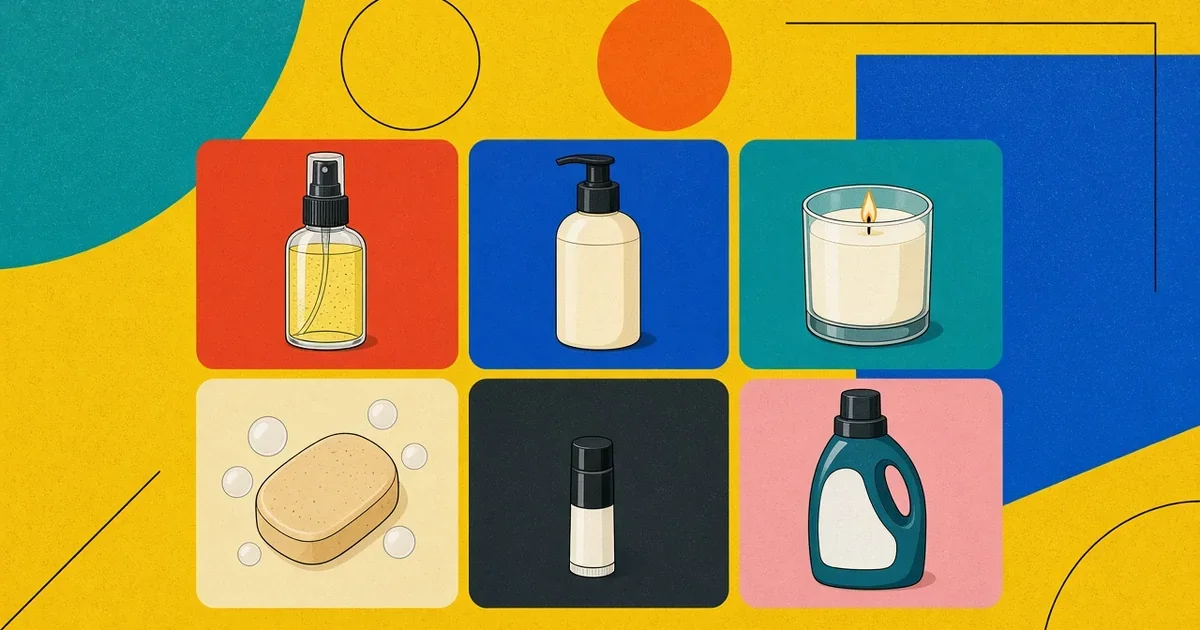
You've finished a fragrance you love and want to use it in a perfume, a body lotion and a candle. Here's the catch: the same formula can be fine in the candle, comfortably within limits in the perfume and over the limit in the lotion. The difference isn't the fragrance. It's the IFRA category of each product.
IFRA categories decide which maximum levels apply to restricted materials in your finished product, so picking the wrong one can make an entire compliance check meaningless. This guide explains how the IFRA categories of the 51st Amendment work, which products fall into each one and how to choose the right category for what you make.
What Are IFRA Categories?
The IFRA Standards set limits for fragrance materials, and many of those limits depend on how a product is used. A lip balm, a body cream, a shower gel and a candle expose people to very different amounts of fragrance.
To handle this, IFRA groups consumer product types into categories based on factors such as where the product is applied (lips, underarms, face, hair, body), whether it's leave-on or rinse-off, and how much fragrance is likely to reach the skin. Each restriction Standard then sets its maximum levels category by category.
The groupings are derived from Quantitative Risk Assessment (QRA2) for skin sensitisation, combined with phototoxicity and systemic toxicity considerations. According to IFRA, this combined approach replaced the older system of 11 categories for dermal sensitisation and 4 for systemic toxicity with a single set of 12. If you're new to the Standards themselves, start with our guide to IFRA standards for indie perfumers.
Two things are worth remembering from the start:
Limits apply to the finished product, not to your fragrance concentrate.
Prohibitions apply to every category. A prohibited material can't be used in any product type, whatever its category.
The 12 IFRA Categories of the 51st Amendment
Here is the official list from IFRA's Guidance for the Use of the IFRA Standards, with typical product examples taken from IFRA's own product lists.
Category 1: Products applied to the lips
Lip products of all types, such as lipsticks, lip balms and glosses, clear or coloured. Children's toys are also placed in this category.
Category 2: Products applied to the axillae
Deodorants and antiperspirants of all types (spray, stick, roll-on, deo-cologne), plus body sprays and body mists. This surprises many indie perfumers: a light body mist doesn't go in the fine fragrance category.
Category 3: Products applied to the face and body using fingertips
Eye products (eye shadow, mascara, eyeliner), facial make-up and foundation, make-up remover, facial masks for the face and eye area, refreshing wipes for face, neck, hands and body, and body or face paint.
Category 4: Products related to fine fragrance
Hydroalcoholic and non-hydroalcoholic fine fragrance of all types: eau de toilette, parfum, cologne, solid perfume, fragrancing cream and most aftershaves (creams and balms excluded). Fragranced bracelets, scent strips for hydroalcoholic products, scent pads and ingredients of perfume kits are also listed here. Most perfumes indie brands sell, whether alcohol sprays or perfume oils, fall into this category.
Category 5: Leave-on products applied with the hands (palms)
Category 5 is split into four sub-categories:
5A, body: body creams, oils and lotions of all types, foot creams, powders and talc (except baby products) and insect repellent applied to the skin.
5B, face: facial moisturisers and creams, including beard and moustache care products, and facial toner.
5C, hands: hand cream, nail care products such as cuticle cream, and hand sanitisers.
5D, baby: baby creams, lotions, oils, powders and talc.
Category 6: Products with oral and lip exposure
Toothpaste, mouthwash including breath sprays, and tooth powders, strips and mouthwash tablets.
Category 7: Products applied to the hair with some hand contact
7A, rinse-off: rinse-off hair chemical treatments, such as relaxers and rinse-off hair dyes.
7B, leave-on: hair sprays, styling aids such as mousses, gels and leave-on conditioners, dry shampoo, leave-on hair treatments and dyes, and hair perfume or hair deodoriser.
Category 8: Products with significant anogenital exposure
Intimate wipes and intimate deodorant sprays, tampons, baby wipes and wet toilet paper.
Category 9: Products with body and hand exposure, primarily rinse-off
Bar soap, liquid soap, body wash and shower gel, shampoo and rinse-off conditioner, rinse-off face cleanser, shaving creams, baby wash and bath products added to bathwater, such as bath salts, oils and bath bombs.
Category 10: Household care products with mostly hand contact
10A: hand dishwashing liquid, laundry detergents with skin contact, fabric softeners (except sheets), hard surface cleaners and other household cleaning products. Fragranced oils for reed diffusers, lamp rings and pot-pourri are also placed here, because of the skin contact involved in handling soaked reeds and refills.
10B: household products including aerosol and spray formats with potential leave-on skin contact, such as manual air freshener and room sprays, aerosol insecticides and animal sprays.
Category 11: Intended skin contact, minimal transfer from an inert substrate
11A, without UV exposure: baby diapers, feminine hygiene pads and liners, incontinence products and dry toilet paper.
11B, with potential UV exposure: scented socks and gloves, dry facial tissues, napkins, paper towels, wheat bags and pillow spray.
Category 12: Products not intended for direct skin contact
Candles of all types, automated air fresheners and plug-ins, incense and joss sticks, scent beads, dryer sheets, machine dishwash products, laundry pods with minimal skin contact, toilet rim blocks and similar products with minimal or insignificant transfer to skin.
How to Choose the Right IFRA Category
Most of the time the answer is obvious, but a few situations trip people up. Work through these questions for each product.
1. What is the product, and how will people actually use it?
Start with IFRA's alphabetical list of product types in the Guidance document and look for your exact product. Think about real use, not just the name on the label.
2. Does the product have more than one intended use?
If a product is meant for two uses that sit in different IFRA categories, IFRA's guidance is to compare the limits in both categories for every ingredient and apply the lowest limit. The same rule applies to products with three or more uses.
A good example is hair perfume. IFRA places it in Category 7B only when it's marketed specifically for hair. If it can also be sprayed on the body, or the label isn't explicit, consumers may spray it straight onto skin, so it should be treated as Category 4.
3. Is your product not listed?
The lists are long but not exhaustive. If your product type isn't covered, don't simply pick the most convenient category. Look for the closest documented product type, ask your fragrance supplier, and when in doubt choose the more restrictive option. IFRA also has a process for companies to request categorisation of a new product type.
4. Is it the same fragrance in several products?
One fragrance used in a perfume, a body lotion and a candle needs to be checked separately for each category. An EdP at a high concentration, a lotion at a much lower dose and a candle may give three very different results. To get the dose side right, our guide to perfume concentration percentages explains how much concentrate typically goes into each format.
Common IFRA Category Mistakes
Putting a body mist in Category 4. IFRA lists body sprays and body mists under Category 2.
Treating a body oil as perfume. Body creams, oils and lotions are Category 5A, even if they're heavily scented.
Assuming a beard oil is a body product. Beard and moustache care products sit with facial moisturisers in 5B.
Forgetting that reed diffuser oils aren't Category 12. Candles are Category 12, but fragranced oils for reed diffusers and pot-pourri are placed in 10A.
Checking only the main use. With dual-use products, the lowest limit across all relevant categories wins.
Note that IFRA has flagged a further review of product types in Categories 10, 11 and 12 as part of preparing the 52nd Amendment, so check the latest guidance once it's notified.
Checking IFRA Categories in ScentLabs
Once you know the category, you still need to compare each material in your formula against the limit for that category, which gets tedious in a spreadsheet. The ScentLabs IFRA compliance checker is built for this step:
Choose the product category for your formula, such as fine fragrance, body lotion or candle.
ScentLabs cross-references each material's percentage against the current IFRA limits for that category.
Materials over their limit are flagged in red, with the allowed maximum shown.
You get a recommended maximum usage percentage per material and a compliance report you can export as PDF.
Checks are updated as new IFRA amendments are released.
The result is only as good as the material data you enter, so keep supplier documentation and the official Standards at hand. The IFRA compliance checker is included in the Pro (US$5.99/month) and Lifetime (US$49.99 one-time) plans.
Frequently Asked Questions
What IFRA category is perfume?
Fine fragrances such as eau de parfum, eau de toilette, parfum, cologne and solid perfume belong to Category 4, along with most aftershaves. Body sprays and body mists are Category 2.
What IFRA category is a candle?
Candles of all types, including encased candles, are Category 12: products not intended for direct skin contact. Prohibited materials still can't be used.
What IFRA category are soap and shower gel?
Bar soap, liquid soap, body wash and shower gel are Category 9, which covers rinse-off products with body and hand exposure.
How many IFRA categories are there?
The 51st Amendment has 12 IFRA categories. Several are split into sub-categories: 5A to 5D, 7A and 7B, 10A and 10B, and 11A and 11B.
What if my product fits more than one IFRA category?
Compare the limits in every relevant category and apply the lowest limit for each ingredient, as IFRA's guidance recommends for multiple-use products.
Try ScentLabs Free
Knowing your IFRA category is easier when your formulas are organised in one place. Create a free ScentLabs account to build up to 10 formulas with 25 raw materials and see their costs calculated automatically. When you're ready to check formulas by IFRA category, upgrade to Pro or Lifetime.
Facts checked against IFRA's Guidance for the Use of the IFRA Standards (51st Amendment) in October 2026. This article is general information, not legal or regulatory advice. Always confirm against the current IFRA Standards and the regulations in your market.