Scaling fragrance batches without losing the formula
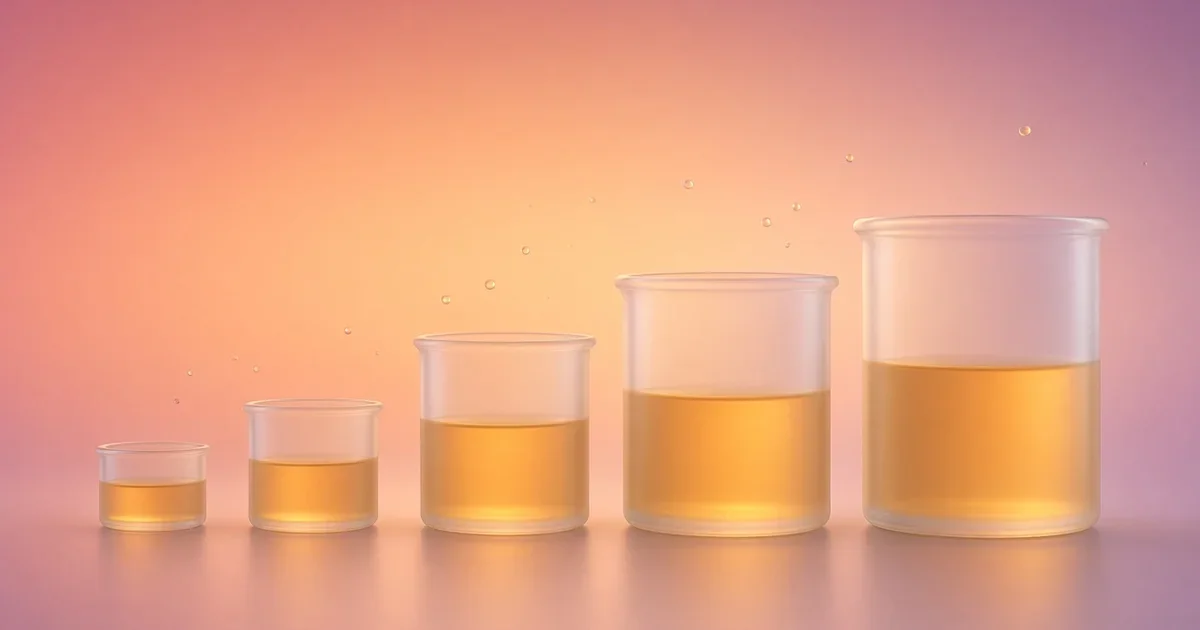
Percentages do not have a size. A formula that smells right at ten grams contains the same proportions at five hundred grams, and it will not smell the same if you round the small lines away to make the arithmetic convenient. Scaling a fragrance batch is the job of turning those percentages into grams your scale can repeat, then writing down the grams you actually poured.
Pick the weight from the smallest line
Look at the lightest material before you pick a target. If the scaled amount sits below what your scale resolves twice in a row, the batch is too small or the material needs a dilution. Pre-dilute that material, enter the dilution as its own line, and scale again. Making a larger batch is the other honest option. Making the number up, and hoping the blotter forgives it, is how a scaled perfume drifts away from the trial you approved.
Match the target to the vessel and to the order you are filling. A hundred grams teaches you more than a kilo you may have to discard, and it is enough to judge top, heart, and drydown. Woods, musks, and resins often need a day on a blotter before you decide the base is wrong. Citrus and light herbs can be read in the first hour, then read again after the drydown in case the base has swallowed them. Do not rewrite the formula from the first five minutes.
Order, heat, and what you record
Put solvents and high-dose materials in first. Leave the trace lines for the end, when a small error is a small share of the beaker. Solids, resins, and thick absolutes should be softened with a portion of the solvent until they are clear, then returned to the batch. Heating the entire concentrate to dissolve one gum drives off the materials you added for the top. Stir until the liquid is uniform before you dilute it to wearing strength. A concentrate sniffed from the cap is not the product.
Record the weight you weighed when it differs from the target. The batch record is what left the scale. The formula remains what you meant. Those two documents diverge on purpose: one is history, the other is the next instruction. If you change a percentage because the scale-up taught you something, save a new version and say what changed. The batch you already poured should still point at the version you poured. Editing that version in place makes the history lie.
Why a larger batch can smell different
Heat, order of addition, and evaporation change a scale-up more often than a arithmetic error does. A trial mixed cold in a small jar can be brighter than a batch that sat warm while a resin dissolved. Alcohol left open on the bench is no longer the weight you tare. None of that means the formula is wrong. It means the batch notes need a line about what you did, so the next person, even if that person is you in six weeks, can repeat the conditions rather than the accident.
Substitutions belong in the same note. If you replaced a material because the bottle was empty, the batch is not the formula, and the stock list should have told you that yesterday. Scaling after you have checked the grams on hand is the sequence that keeps a promise. Scaling first and shopping second is how the formula changes in the beaker without a version to show for it.
Stock and cost move with the batch
Logging the batch deducts the grams from each material that has a balance. It also freezes the cost of what you used, so a later price change on a new lot does not rewrite what this bottle consumed. The formula, priced with today's rates, still tells you what the next batch will cost. You want both numbers. One is the quote. One is the record.
Run the category check on the formula version you are about to pour, not on an export from last season. A dose that passed as a fine fragrance can be over a limit if this batch is going into a leave-on product. The check does not replace a safety assessment. It stops the overage that is already visible in the percentages.
The practical sequence is short. Confirm the version. Scale to a weight the small lines can survive. Check the shelf. Weigh large materials first. Write the grams you added and anything you had to warm or replace. Dilute, label, and wait for the drydown before you decide the perfume failed. ScentLabs does the multiplication and the deduction. The judgment of whether the batch matches the trial is still yours, and it is easier when the record matches the beaker.